
Plea Agreements: Before You Sign Be Very Sure
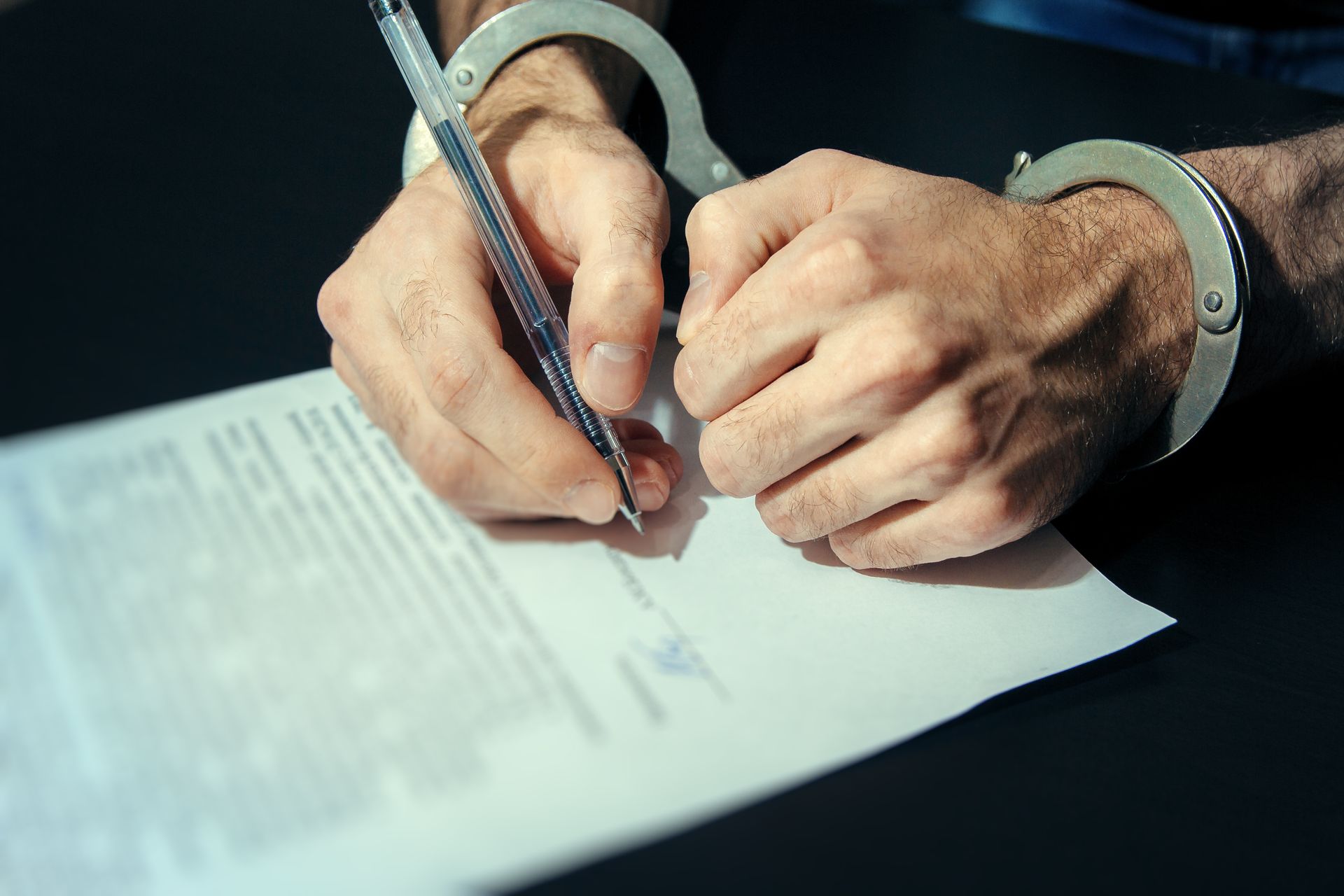
If you or someone you care about has ever faced criminal charges, you already know the potentially crushing weight of the justice system. The anxiety is paralyzing. The uncertainty about your freedom, your job, and your family’s future can make you desperate for a way out. In that moment of profound vulnerability, the prosecution will at some point try to slide a piece of paper your way using your attorney as the messenger: the plea offer.
It may look like a life raft. It promises certainty. It offers at least a bit of a known outcome instead of the terrifying spectre of a trial. You sign your name, the judge walks you through a plea “colloquy”, determines his agreement, gives you your final sentence, then gavels the case closed, and you finally take your first deep breath in months. But fast forward a year, or five years, or ten.
For a staggering number of people, that initial wave of relief inevitably curdles into deep, immovable regret. Because when you sign a plea agreement, you are not just accepting a guilty plea; you are accepting an outcome that may still be left to the judge’s discretion, and a permanent redefinition of your life. Before you put your pen to that paper, you need to be absolutely, undeniably sure you’re doing the right thing for you - today and in the future.
The Conveyor Belt of Justice
The reality of the modern American criminal justice system is not found in dramatic courtroom speeches or surprise witnesses. It is found in conference rooms and crowded hallways where futures are bartered away in minutes.
Recently, the United States Supreme Court handed down a landmark decision in
Hunter v. United States (June 2026), a case that pulled the curtain back on just how coercive agreements have sometimes become. In his concurring opinion, Justice Neil Gorsuch—joined by Justices Sonia Sotomayor and Ketanji Brown Jackson—delivered a searing indictment of the modern system. “In our times, the jury trial has given way to a conveyor belt of plea bargains,” he wrote.
He is exactly right. The system is no longer designed to test the government’s evidence; it is designed to process human beings as efficiently as possible. In
Hunter, the defendant was indicted on charges that threatened him with up to 300 years in prison, as if he could live that long, and a $10 million fine. Faced with that apocalyptic scenario, he did what the overwhelming majority of defendants do: he took a bargain. He agreed to plead guilty to a single count involving roughly $38,000, and critically, he signed a waiver giving up his right to appeal.
But the "conveyor belt" is not designed to be fair. Despite pleading to the $38,000 amount, the judge sentenced him based on uncharged conduct to repay a total of nearly $500,000, drastically increasing his prison time to 51 months. Because he had signed an appeal waiver, the government argued he had no right to fight back, even if the sentence was fundamentally flawed. While the Supreme Court ruled that an appeal waiver cannot be enforced if it results in a "miscarriage of justice", it made the holding very, very narrow and difficult for the typical defendant to use.
The bigger lesson is chilling. Prosecutors routinely overcharge, stacking indictments so high that even an innocent person might be terrified into taking a plea just to avoid the risk of spending the rest of their life in a cage. Even then, they may find that a judge enters a sentence for a far longer period than they even thought possible. The conveyor belt is constantly moving, and the pressure to step onto it is immense.
The Hidden Costs to the Prime of Your Life
If you are between the ages of 18 and 45, you are in the critical building phase of your adult life. This is the window where you establish your career, buy a home, start a family, and build your financial foundation. A criminal conviction is a wrecking ball to every single one of those pillars.
When you enter a plea agreement in court, the judge will tell you about the direct consequences: the probation, the fines, or the jail time. Sadly, many times these terms are more than what you anticipated when you signed the plea because the prosecution is skilled and artful at building in discretion for the judge to make your sentence worse than you expected.
But if you can imagine there is something even worse, the reality is that what they do not spend hours explaining are the collateral consequences—the invisible chains that you will wear long after your formal sentence is complete.
You might lose professional licensing. If you are a nurse, a teacher, a financial advisor, or a commercial driver, your career could evaporate the minute the plea is entered and you are guilty of a crime. Background checks have become universally standard; a felony or a crime of dishonesty on your record will immediately disqualify you from countless job opportunities, effectively capping your earning potential for decades. Housing applications get rejected. Your credit can be impacted. If you are not a U.S. citizen, a seemingly minor plea deal can trigger immediate deportation proceedings, tearing you away from your family.
We see this all the time. Someone accepts a plea deal because they just wanted to avoid jail and "get it over with." Three years later, they are clean, sober, and trying to advance their career, only to hit a brick wall every time a background check is run. They realize, too late, that the quick fix was a permanent trap. They traded temporary peace of mind for a lifetime of closed doors.
The Danger of the Willing Lawyer
Perhaps the most tragic part of the "conveyor belt" is that some defense attorneys are all too willing to help operate it. It is an uncomfortable truth in the legal profession, but it needs to be said: a plea deal is easy. It requires less paperwork, less preparation, and less conflict. And to the client, it often seems like an easy way out at the time as well.
When you hire a lawyer, you are entrusting that person, literally, with your life. But if your lawyer’s first instinct is to immediately ask the prosecutor for a deal, you are in danger. A lawyer who operates strictly as a plea negotiator is not defending you; they are simply facilitating your surrender - when the opportunity is always there to fight for your rights.
Pleas are entered frequently when defendants feel pressured by their own counsel. The lawyer points out the towering stack of charges—just as in the
Hunter case—and tells the client that a trial is very risky. While it is a lawyer’s duty to provide an honest assessment of risk, it is also his job to fight. If the government cannot prove its case, or if the police violated your constitutional rights to obtain their evidence, riding on the conveyor belt is a tragedy. You need a defense that pushes back against the machinery, not one that greases the wheels.
Serious charges deserve a defense that starts with planning for the outcome
you
desire. You may be able to get that - you may not. Either way, you deserve the best effort toward that end.
If your goal is a negotiated resolution, we will pursue that with aggressive care, but even then, our focus remains on ensuring that your rights are protected and that you are not strong-armed into signing away your future.
And if a plea is not your intent, we come to the case with a very different posture. We prepare to seek a dismissal. We prepare to take the case to a jury trial. We prepare to hold the government to its heavy burden of proof, exposing reasonable doubt wherever it exists, and giving you your life back intact.
We understand the stakes. We know that your liberty, your clean record, and your ability to build a life at whatever stage you are now, is on the line. We cannot guarantee a specific result—no honest lawyer can—but we can guarantee that we will zealously advocate for your rights in the manner you choose to pursue them.
Take Control of Your Future
If you are facing a serious criminal charge, do not let panic dictate your future. Do not sign a plea agreement just because the system makes it convenient. Once that signature is on the page and the judgment is entered, unwinding a bad deal through post-conviction relief or an appeal is monumentally difficult. Remember that - once the plea is entered, you can’t undo it.
Take a deep breath, step back and think clearly. Then speak to an experienced criminal defense attorney who is prepared to fight for the life you want to keep.
If you want a defense team that plans a strategy built on your goals, contact Landmark Legal Services. Call us at
(317) 360-5174 or request a case evaluation now. Let’s talk about the real options for your future, before you sign it away.